
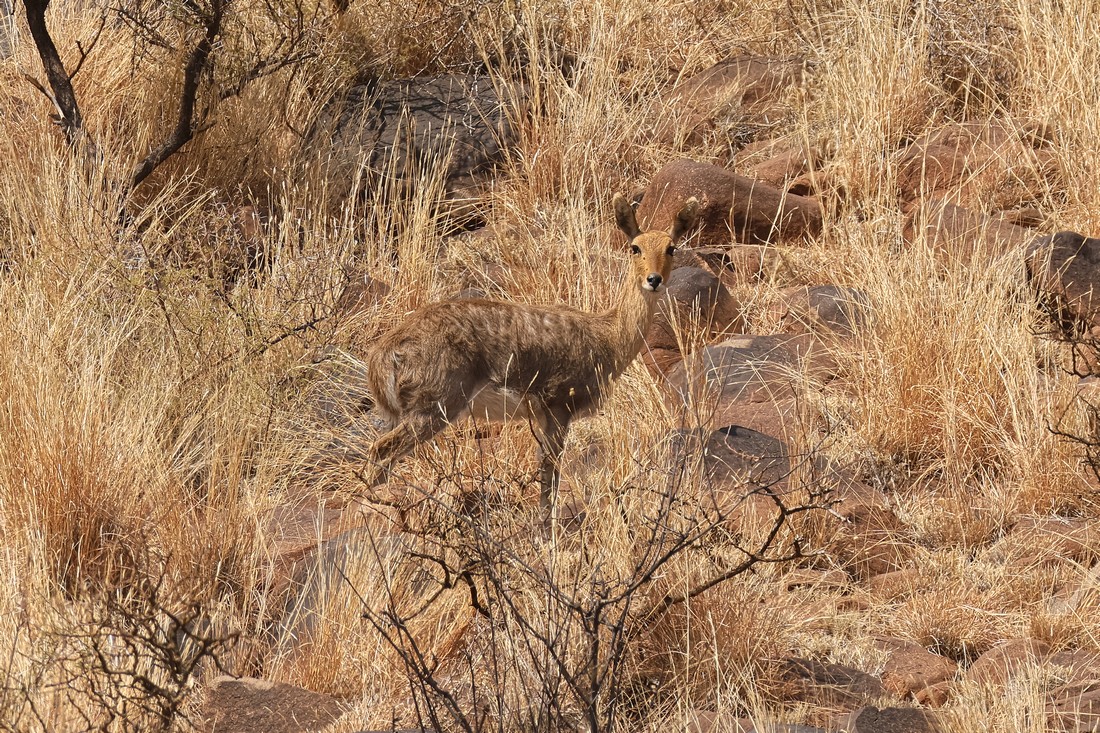
 4497 The grey rhebok also known as the vaal rhebok and is a less common creature of the uplands above 1000m
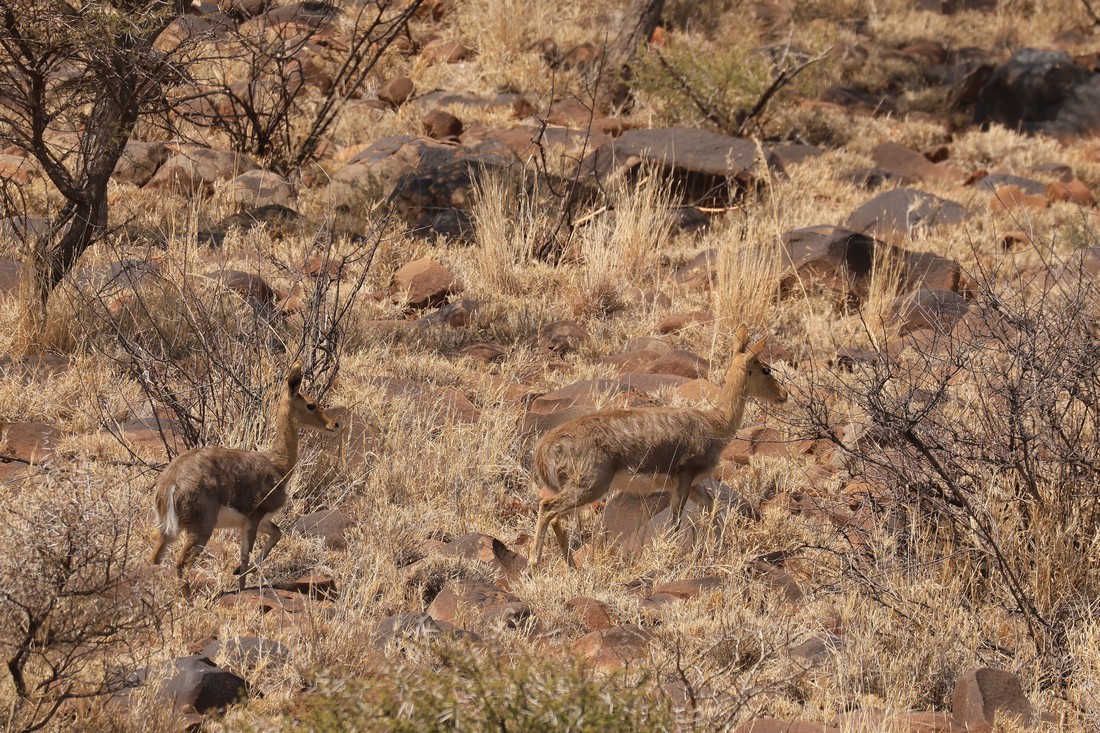 4498 Grey rhebok like dry deeply drained grasslands where frosts limit tree growth. It avoids tall grass so it has a clear view
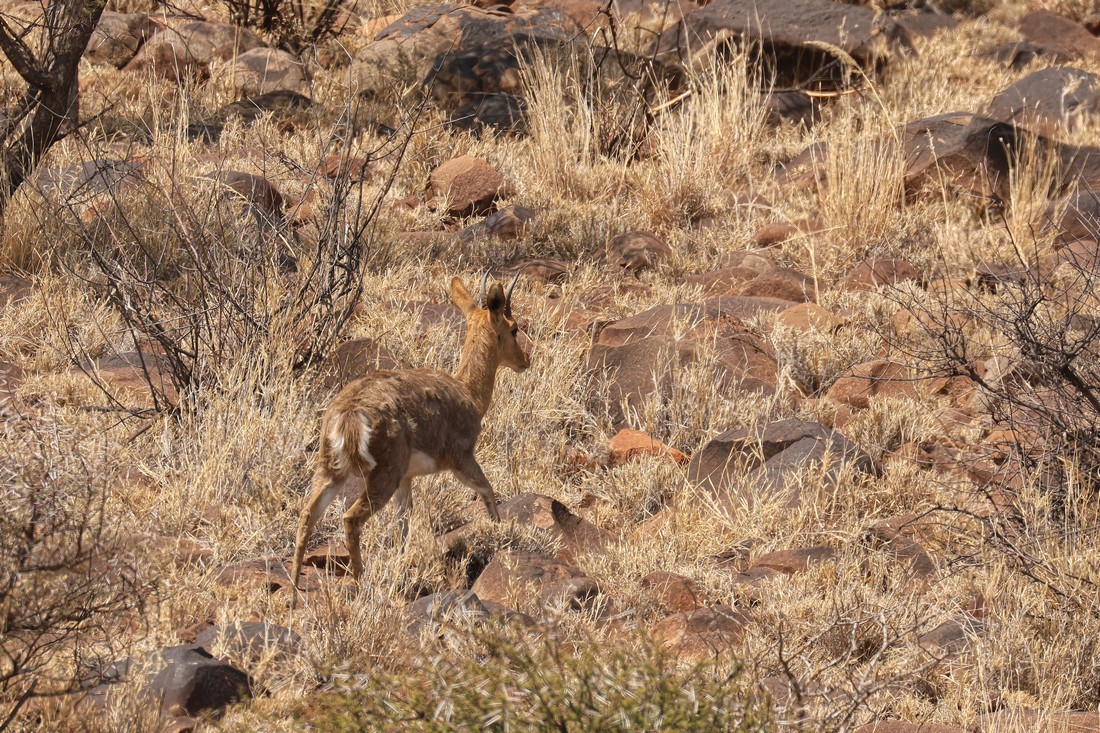 4499 Only male grey rhebok have horns
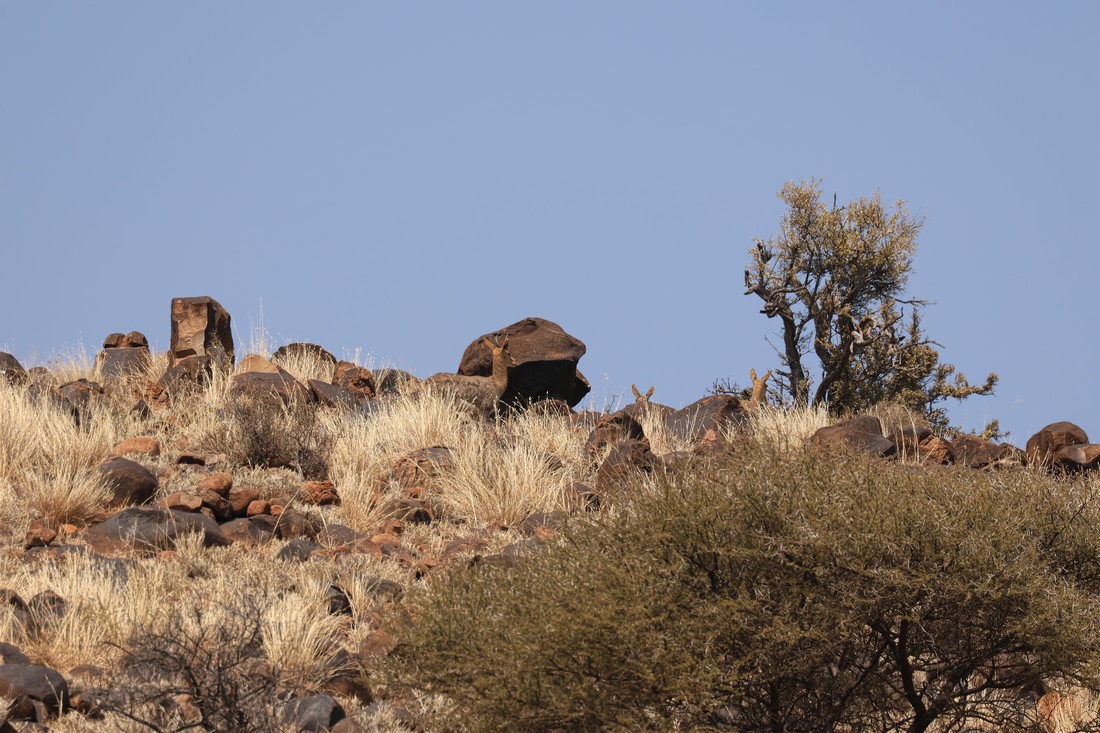 4500 Grey rhebok disappearing over the ridge line
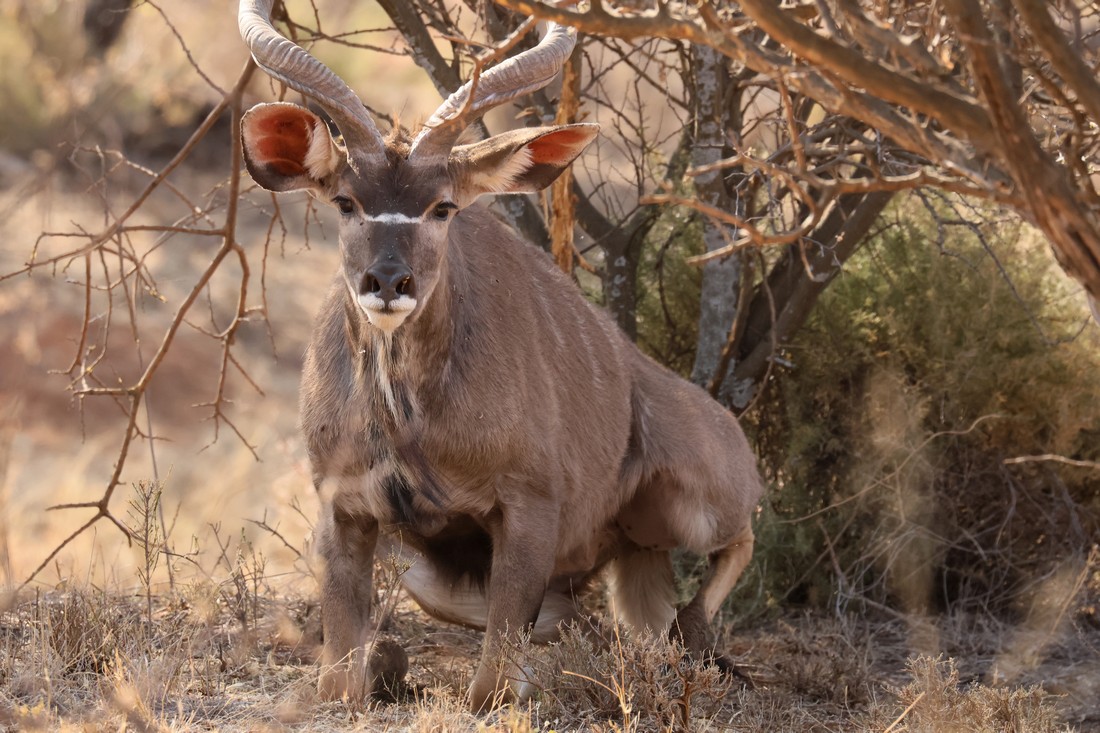 4501 Startled a greater kudu as he was resting under a bush
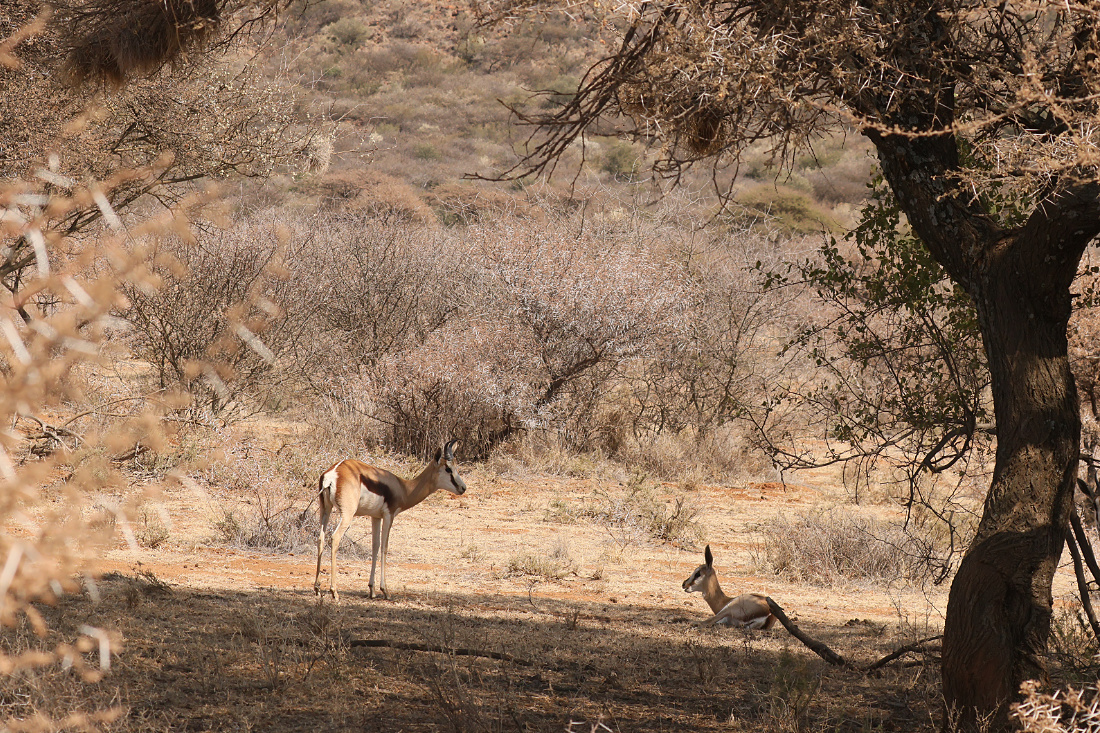 4502 Springbok and calf. Newborns are yellow-brown and develop their stripes later; they can walk/run soon after birth
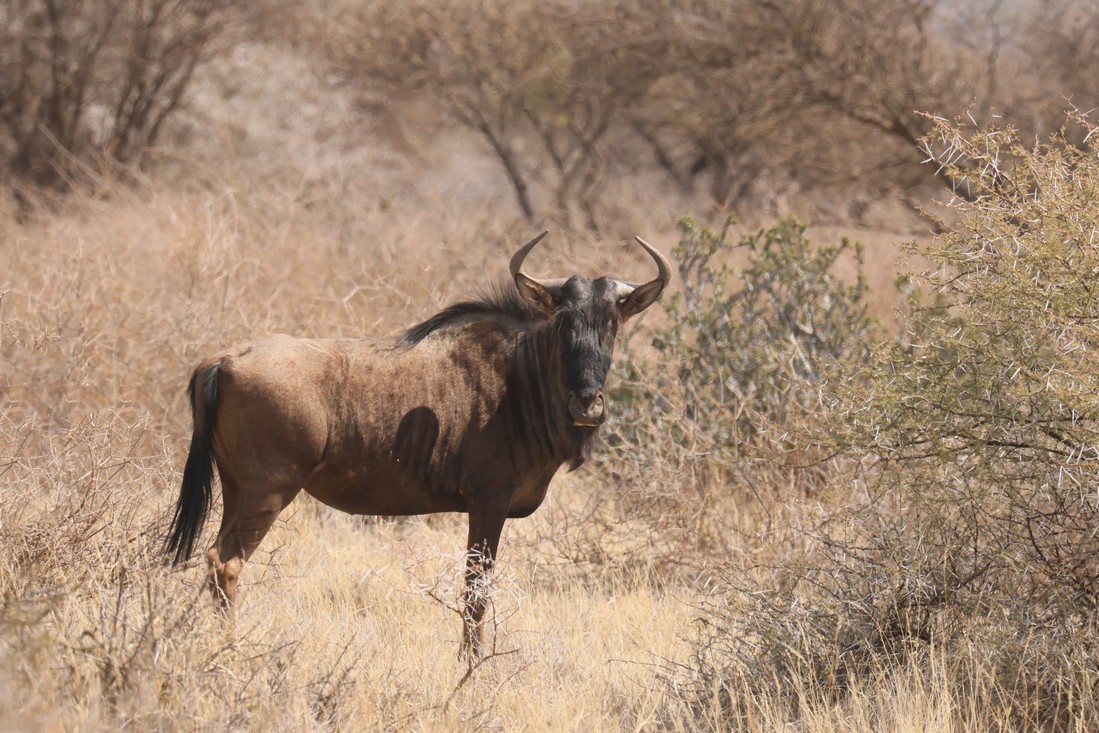 4503 Blue wildebeeste prefer short grassland within 20km of permanent water
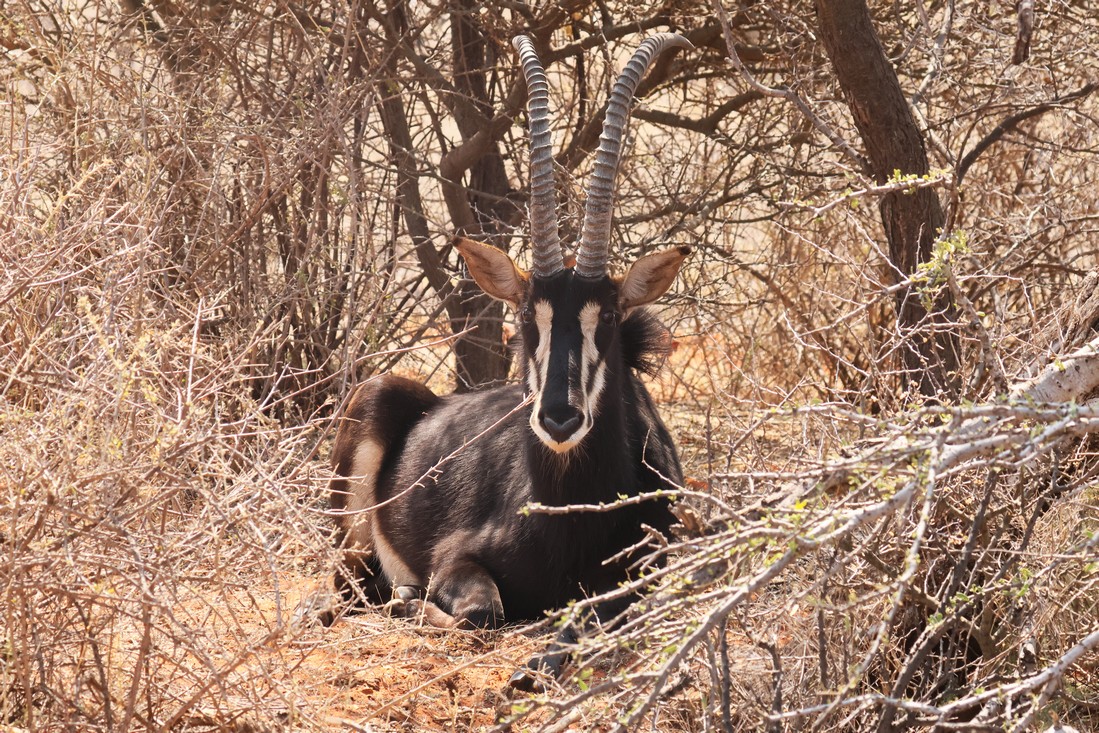 4504 Sable antelope are mostly found in the miombo woodlands of Eastern and Southern Africa
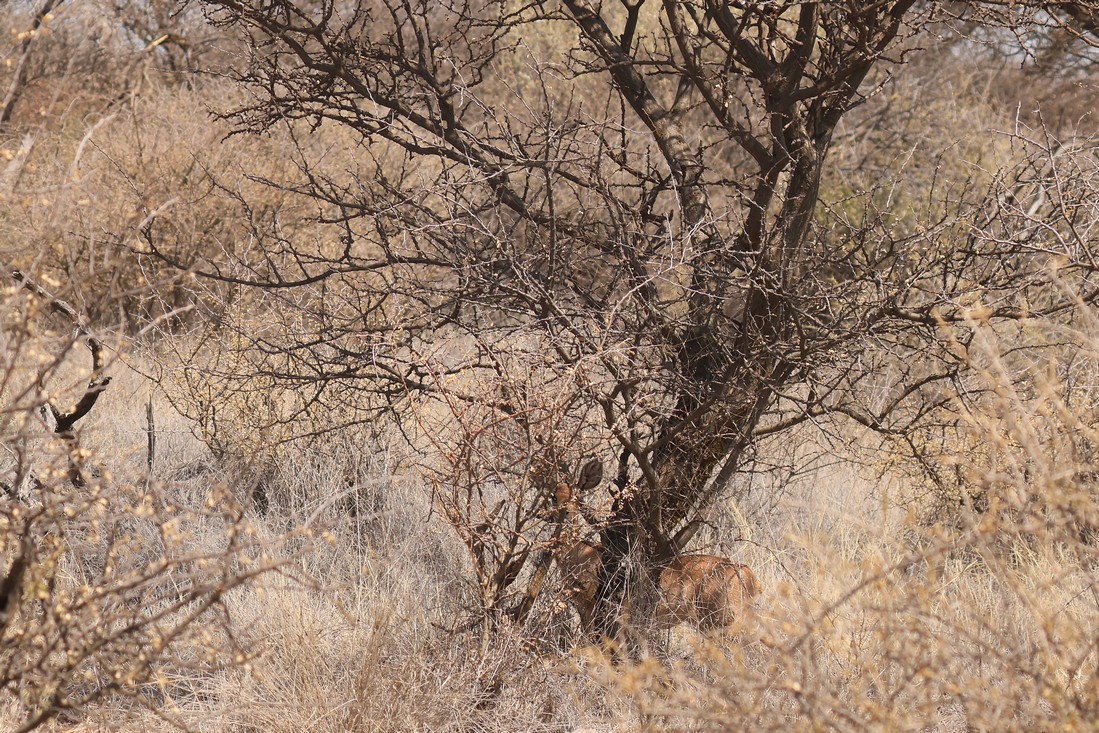 4505 The shy little steenbok was hard to spot
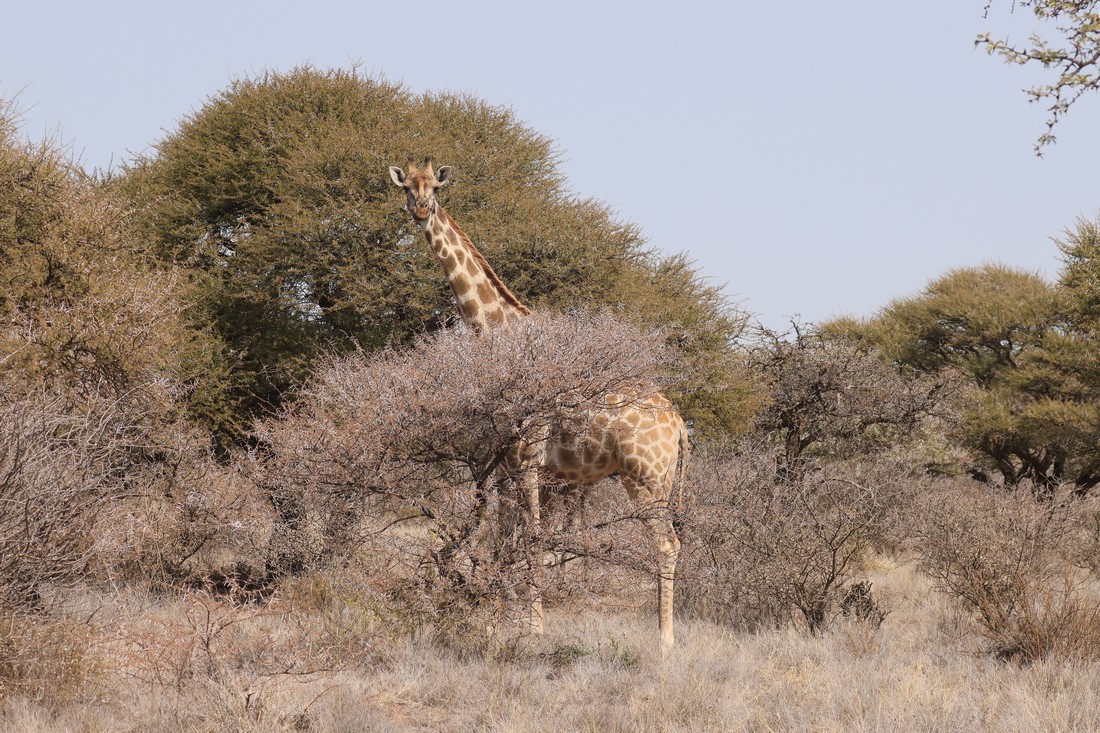 4506 Southern or Cape giraffe. It amazes me that they have the same number of neck bones as humans
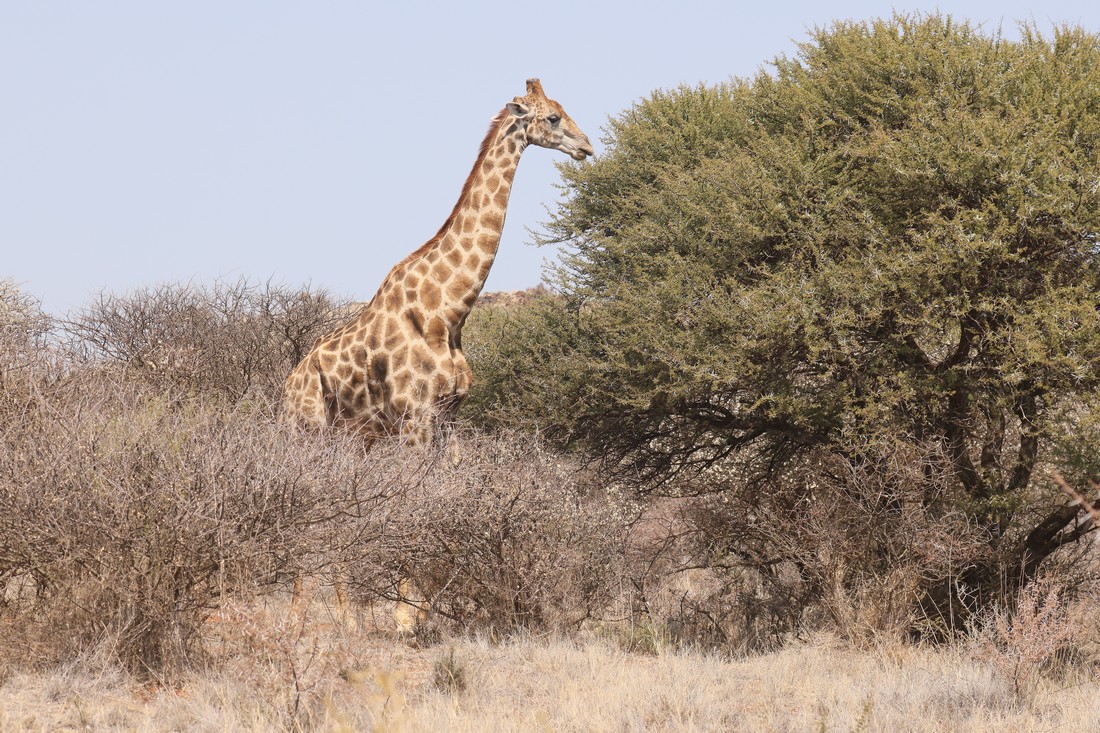 4507 The name giraffe was derived from an arabic word meaning fast walker. With those legs I'd say they are
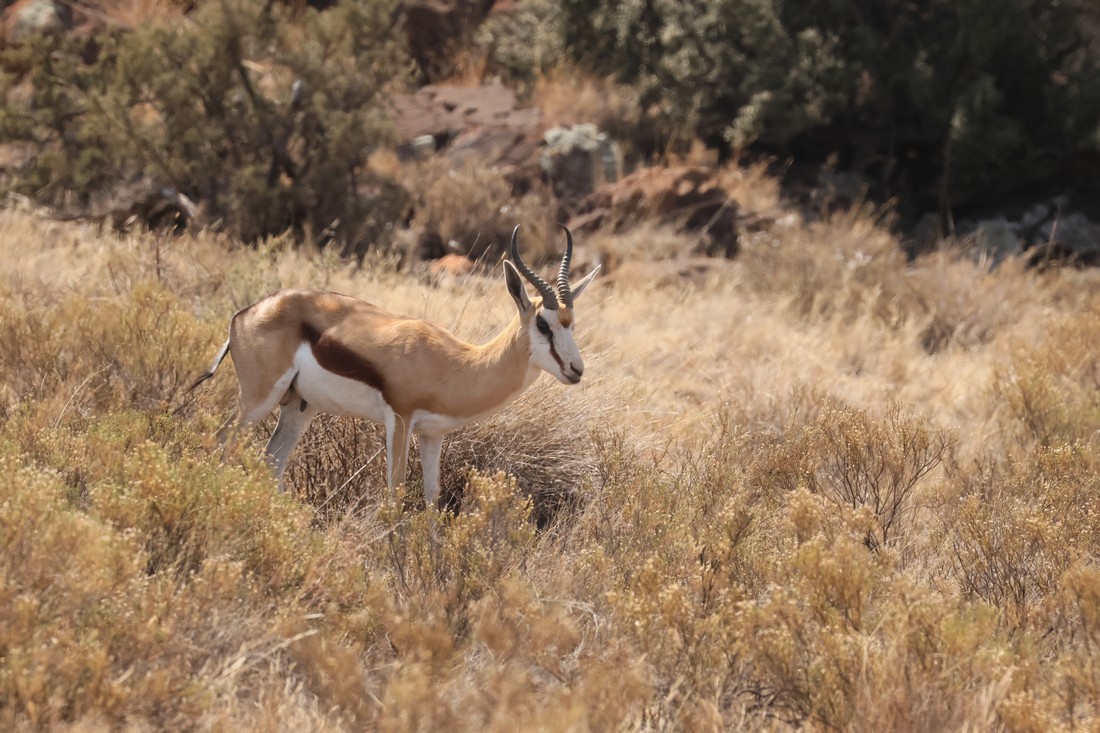 4508 Springbok are very common and often found in large herds, especially in the Kalahari proper
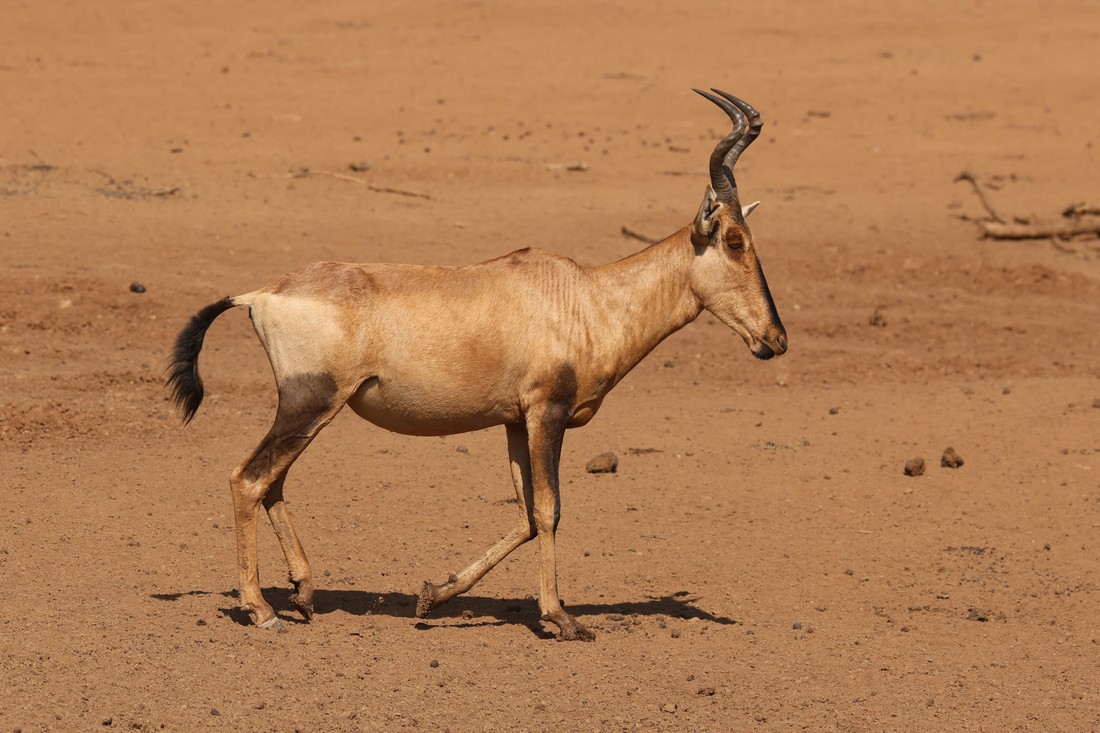 4509 Red hartebeeste are primarily grazers, eating grass, leaves and shoots
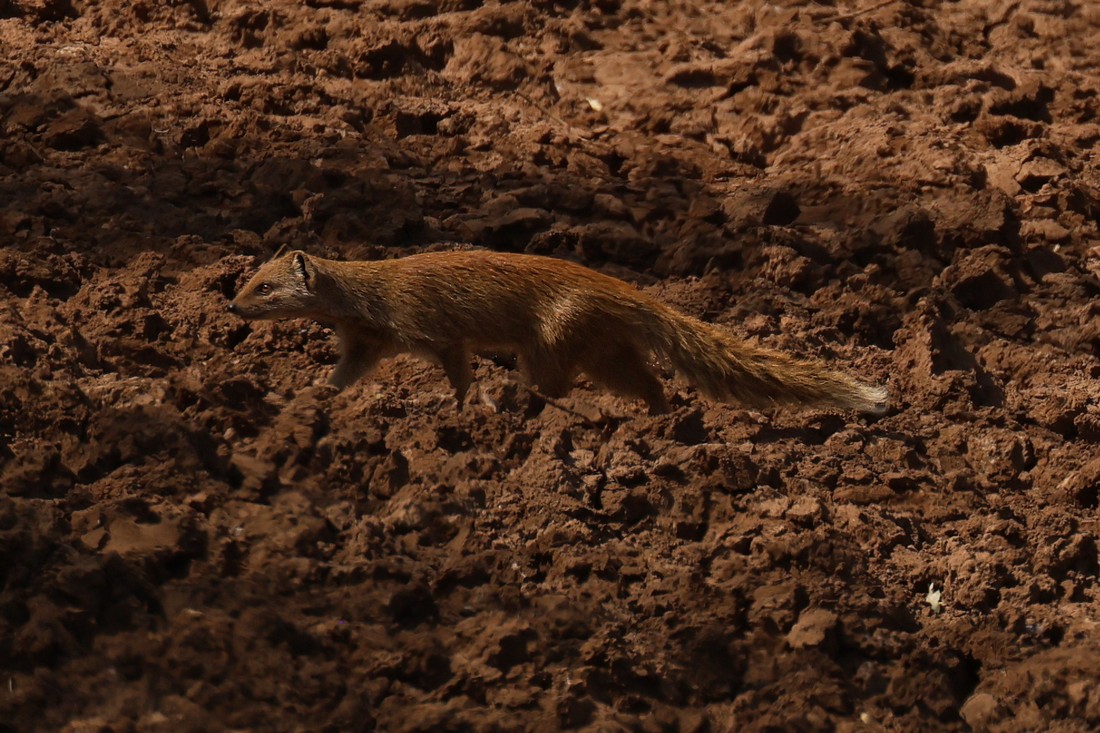 4510 This is a yellow mongoose, although it looks a bit darker in the shade. They often forage alone but live in dens with others
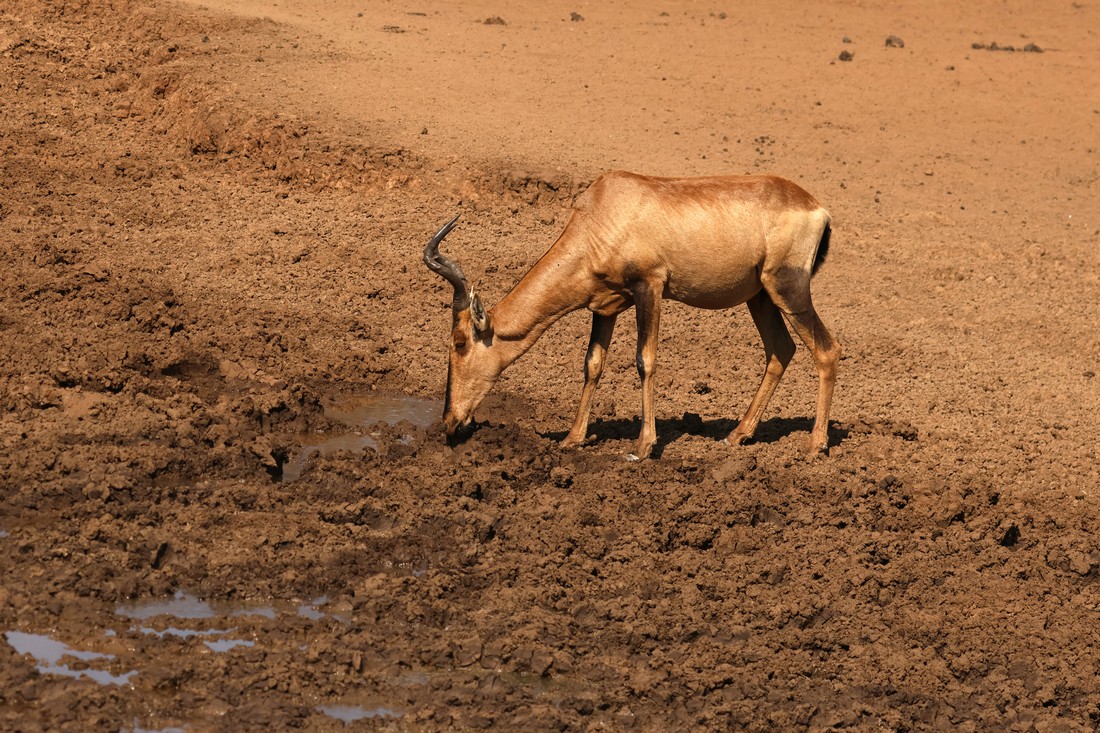 4511 The red hartebeeste approaches an almost dried up waterhole. The rains are due soon
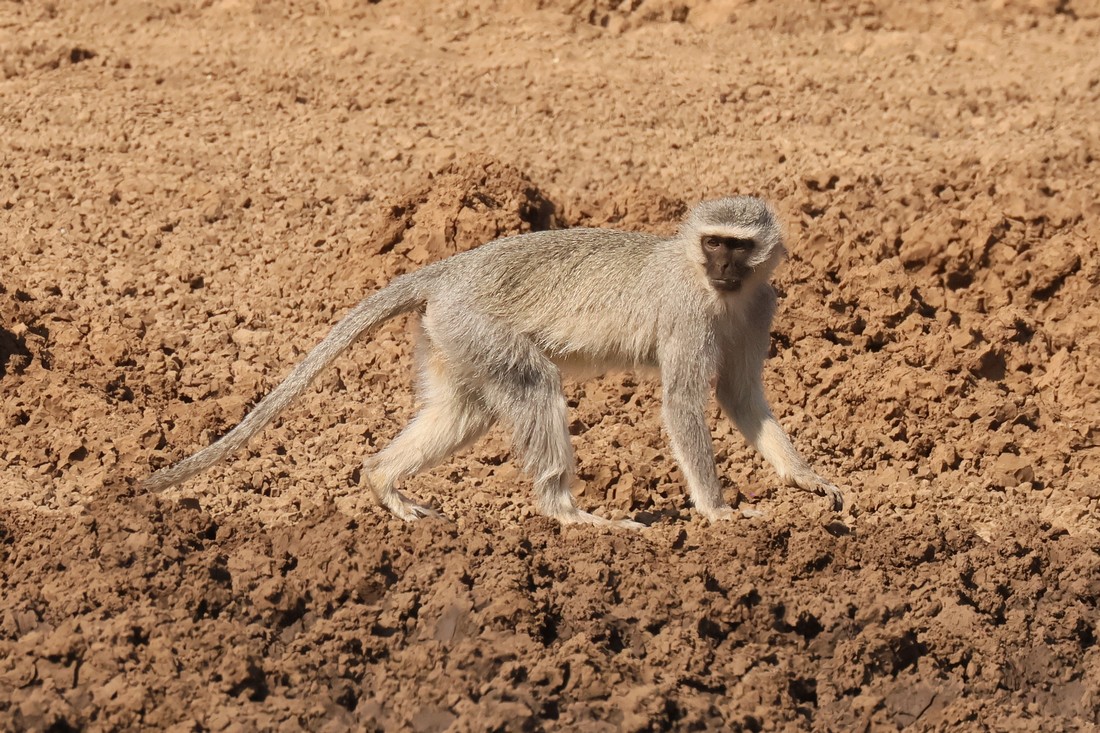 4512 Vervet monkeys spend a great deal of time on the ground looking for food, but also feed and sleep in trees.
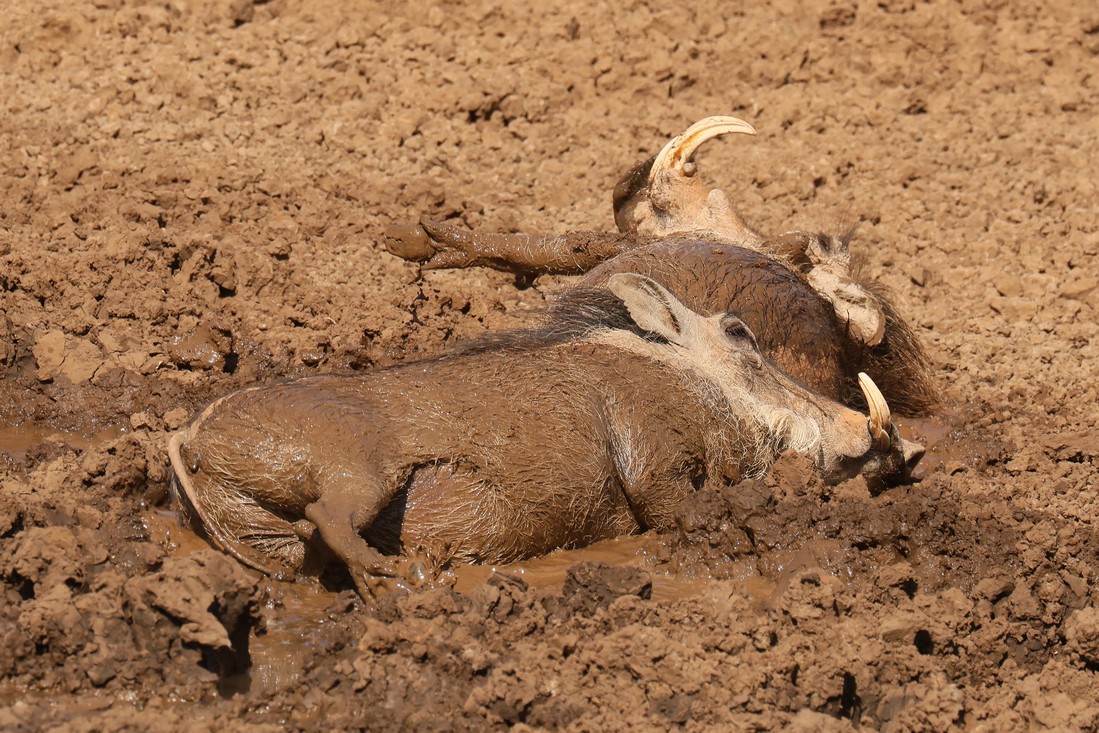 4465 The warthogs favourite pastime
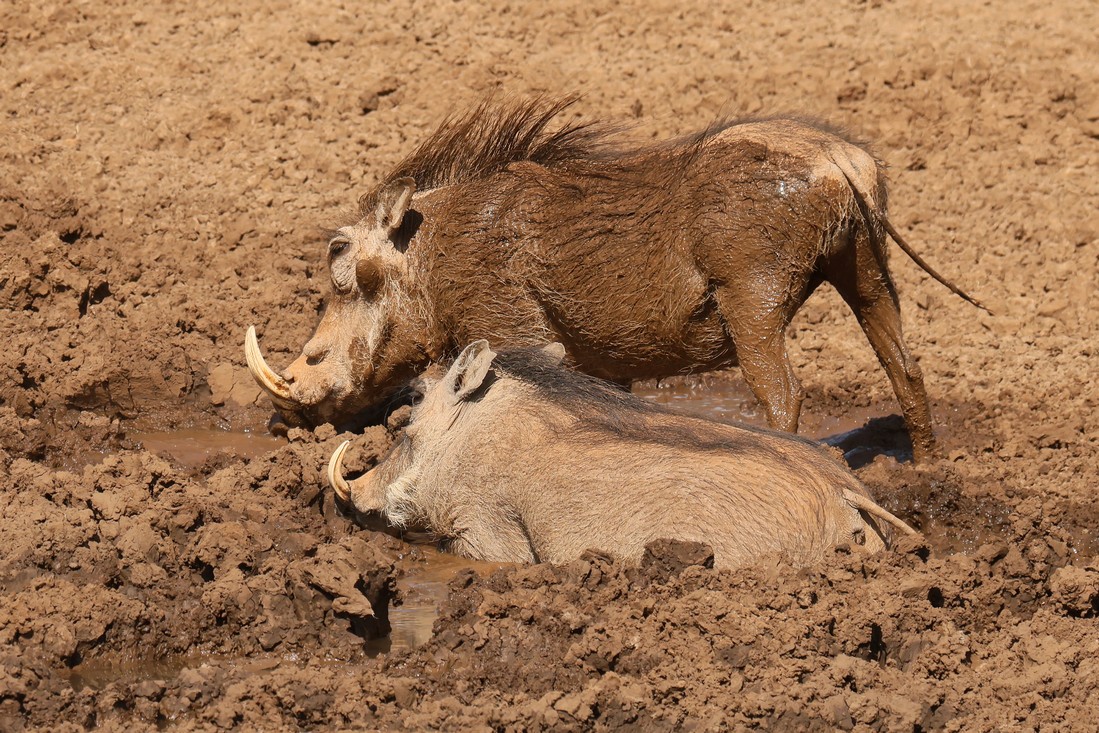 4514 The mudbath keeps their skin healthy and helps to remove parasites
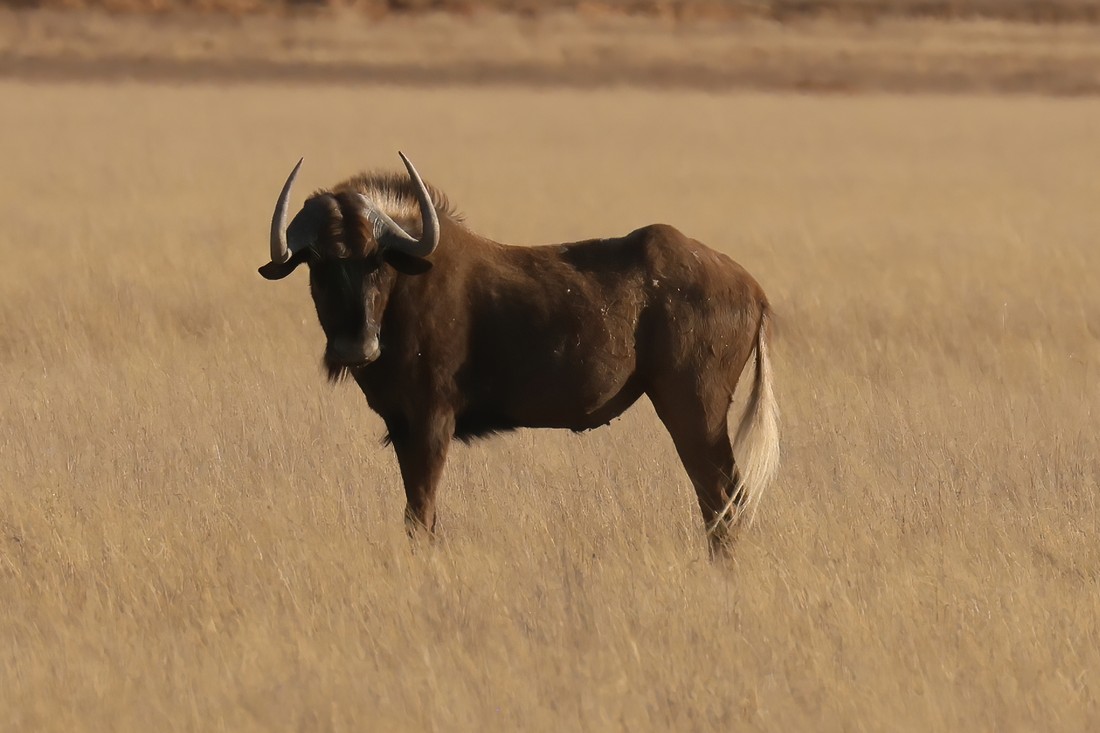 4515 White-tailed gnu, also known as Black wildebeeste. Males are territorial and female herds pass through
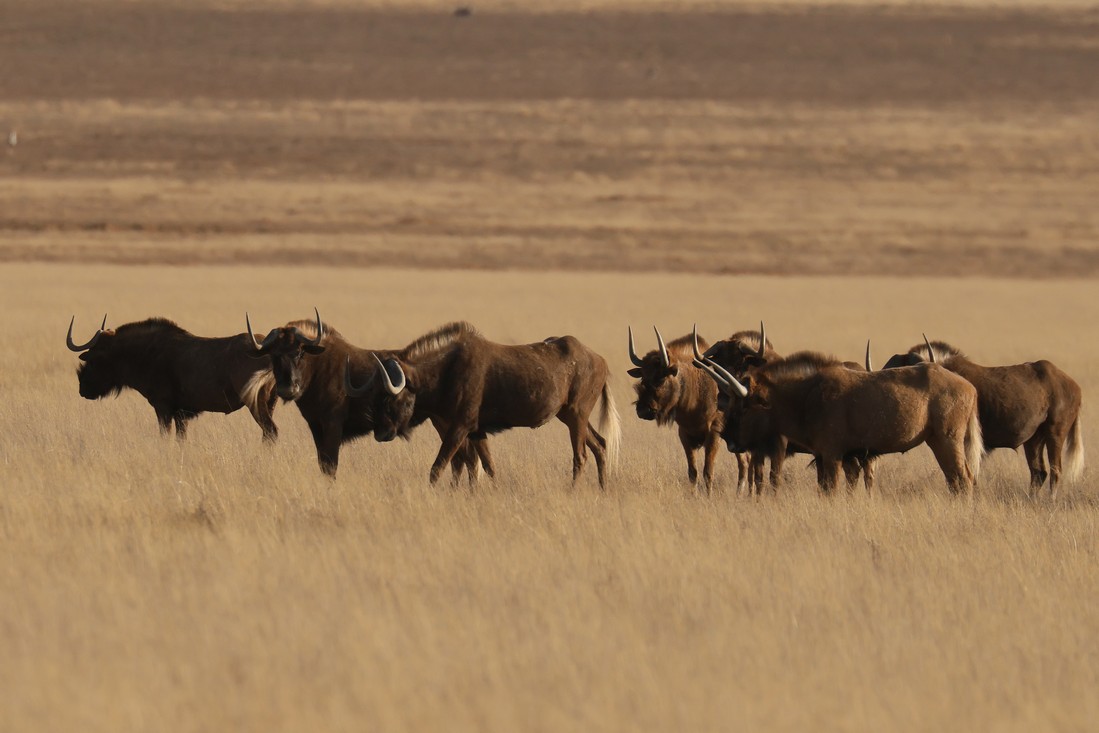 4516 White-tailed gnu are extinct in the wild. These were on a small private reserve. Usually found in herds of up to 60
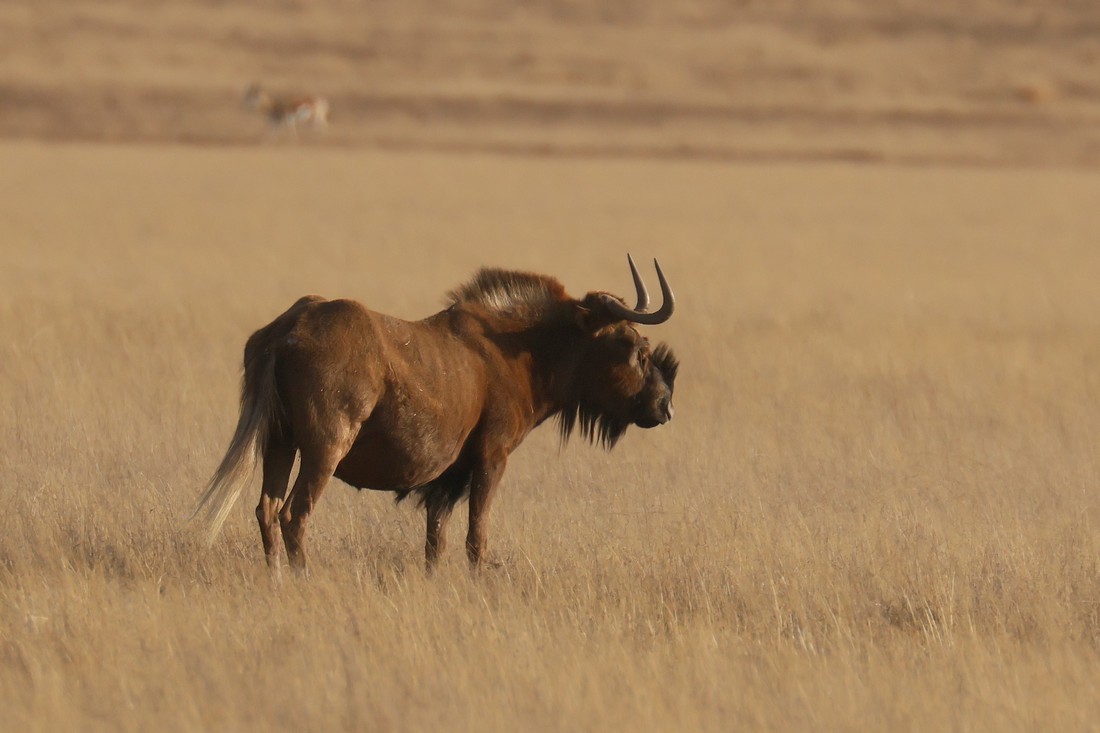 4517 They have pretty lethal horns so males have evolved appeasement gestures to try to settle disputes over territory
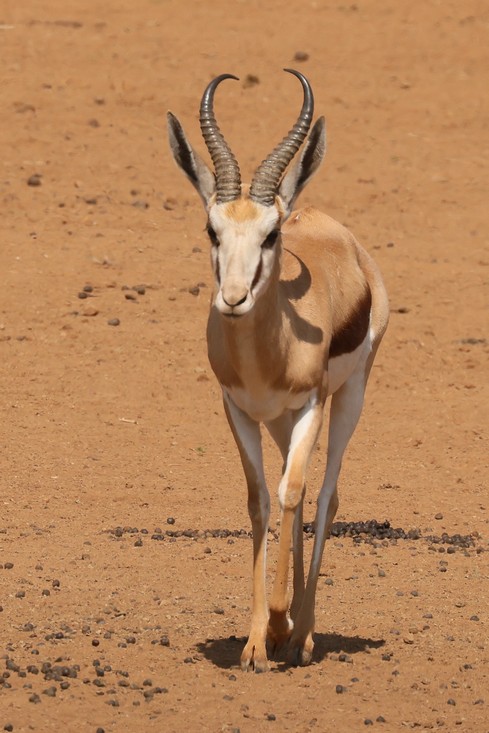 4518 Springbok
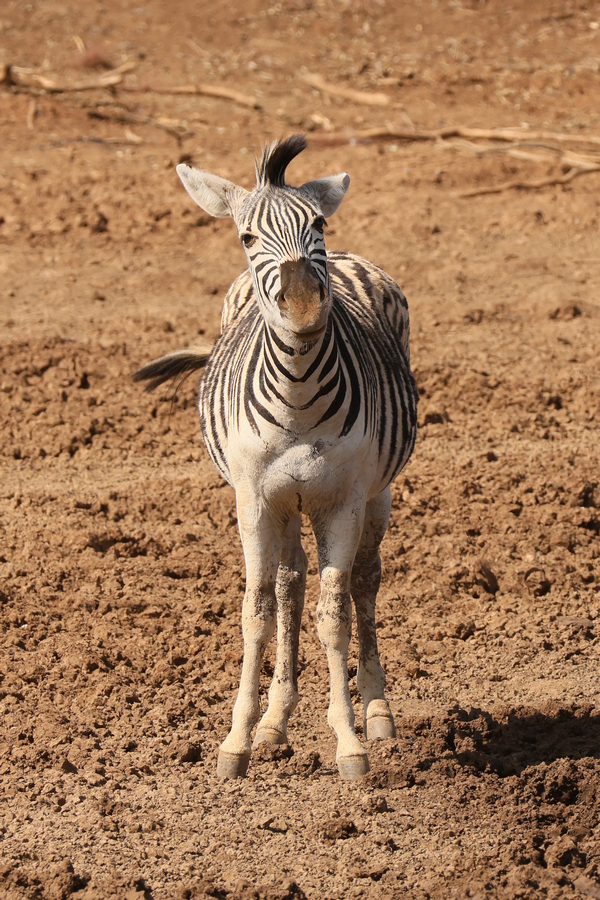 4519 Burchell's zebra
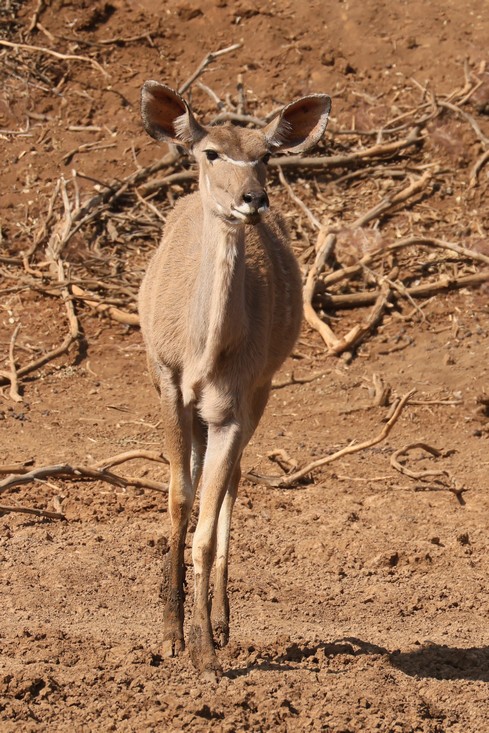 4520 A delicate looking female greater kudu