
Transition zone from Kalahari to Nama Karoo
Located 80km south west of Kimberley
The Riet river flows along the northern border
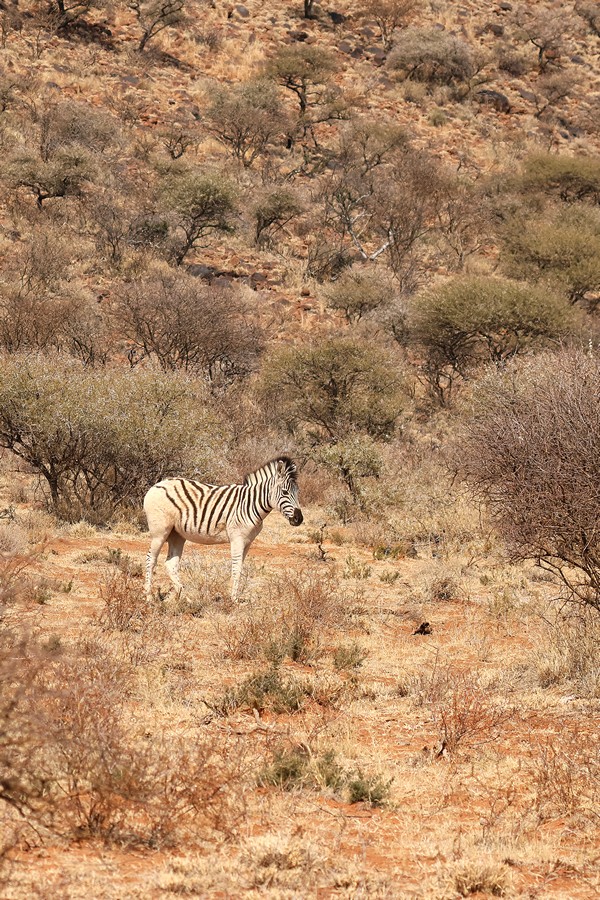
Mokala is famous for its plains zebras that have significantly reduced striping on their hindquarters and backs, closely resembling the historical appearance of the extinct quagga
Mokala is 27500ha
Consists of hills and open plains and is very scenic in many places
It holds some easy to see rare antelopes including sable and roan
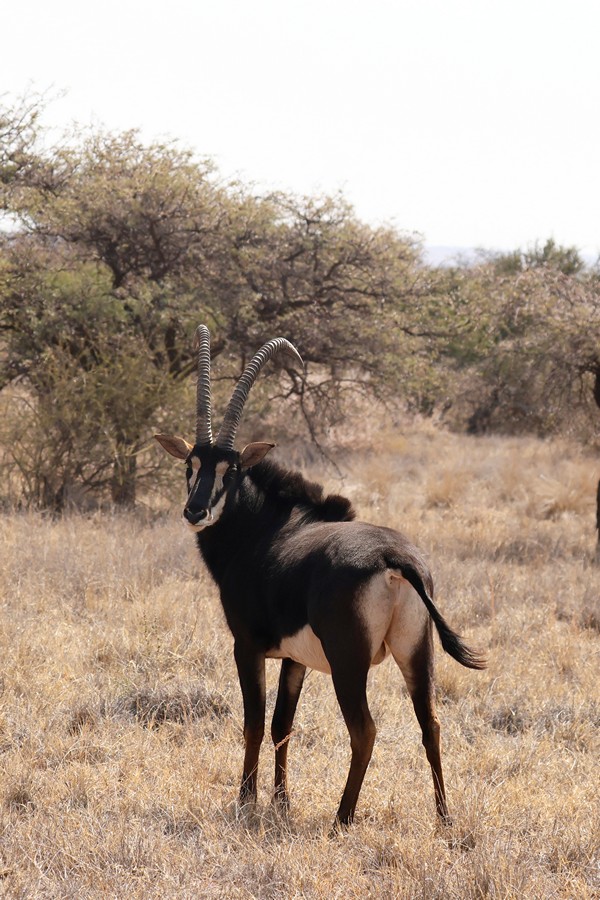
The park is an important sanctuary for endangered sable antelope
There are about 44 species of mammals
No elephants
No big carnivores
Black and white rhinos
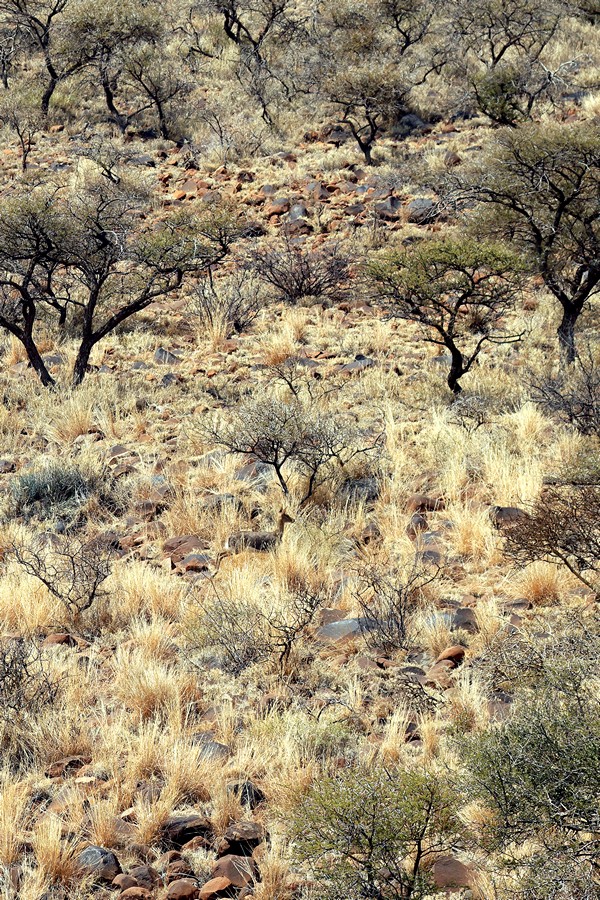
If you expand the photo you may spot a grey rhebok climbing the hill
Malaria and Tsetse fly free
Geology is mostly Tertiary or recent sands, with some volcanic hills
Visitor numbers are very limited
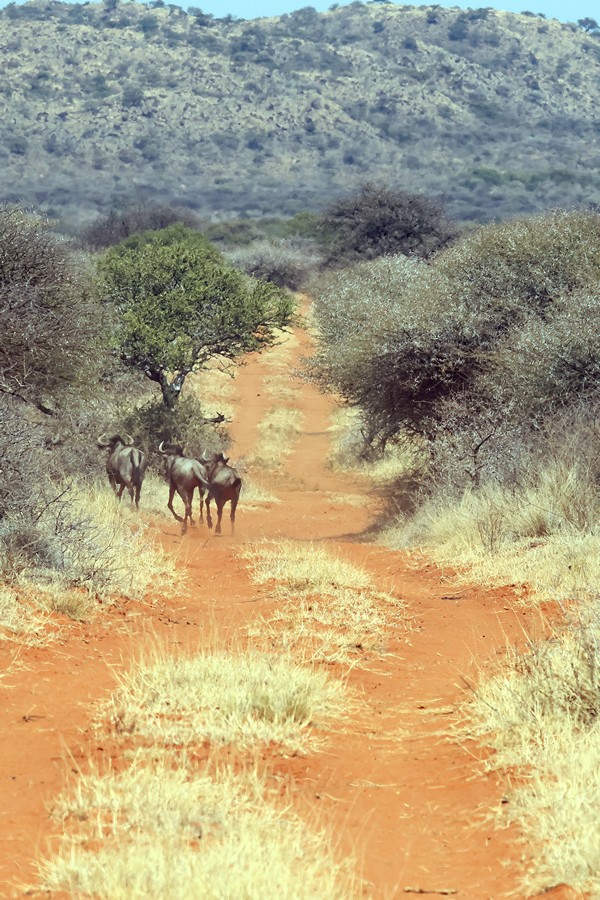
Plenty of blue wildebeeste here
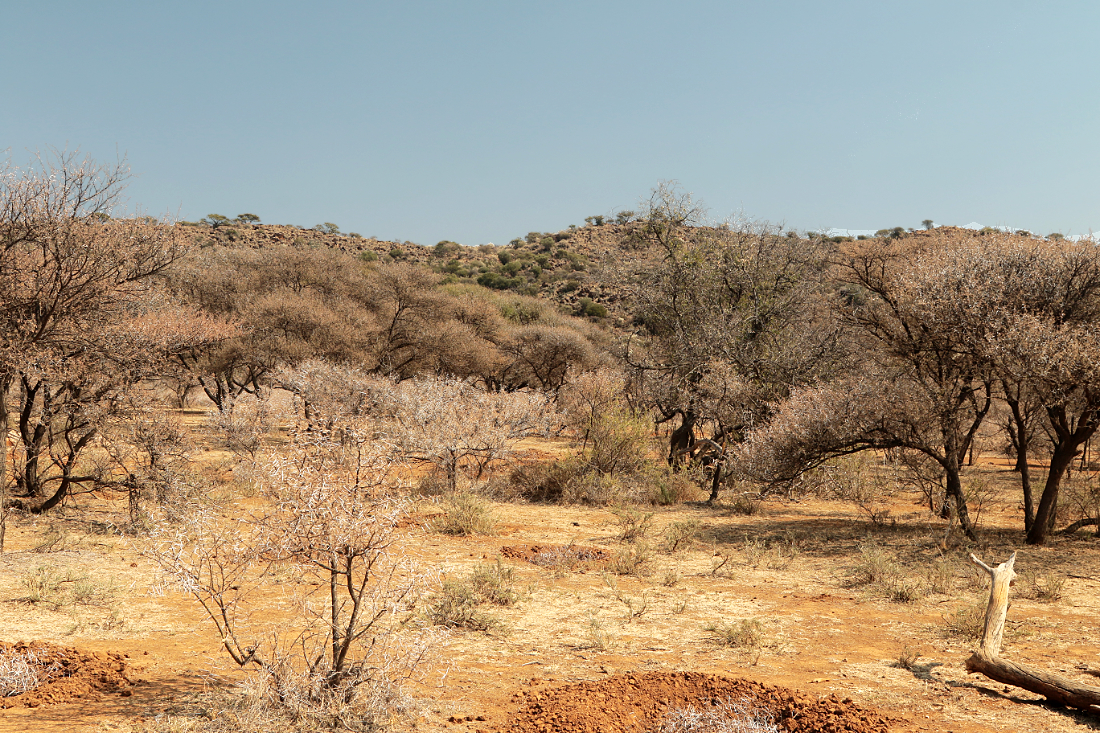
The park is a good mix of savannah and
thorn bush. The crescent shaped holes in the
ground are where holes have been dug to trap
rainwater, and new trees panted in them, then
covered in thorns to stop animals from eating
the developing plants. It is a remarkably
successful and cheap method of land restoration
Mokala is South Africa's newest National park, established in 2007. Mokala is the Setswana name for Camel thorn, of which there are many in the park. It is a small fenced park of 275 km2 surrounded mostly by farmland. As there are a lot of game farms here, it's a good place to spot Sable and Roan on the way in. Mokala is located 80km southwest of Kimberley, accessed on good roads so an easy drive. North Cape (map).
It is siuated in a semi arid environment, and has a predominantly summer rainfall pattern, with normal amounts being 300-500mm annually. Rainfall is from November to March with the peak in February, and there are frequent thunderstorms
In Summer temperatures can occasionally reach 43C, although that is uncommon, and Winter temperatures can drop as low as -6C, with frosty mornings, between May and sometimes as late as September. However when we were there the morning was cool but soon heated up to perfect sort of warm day temperatures.
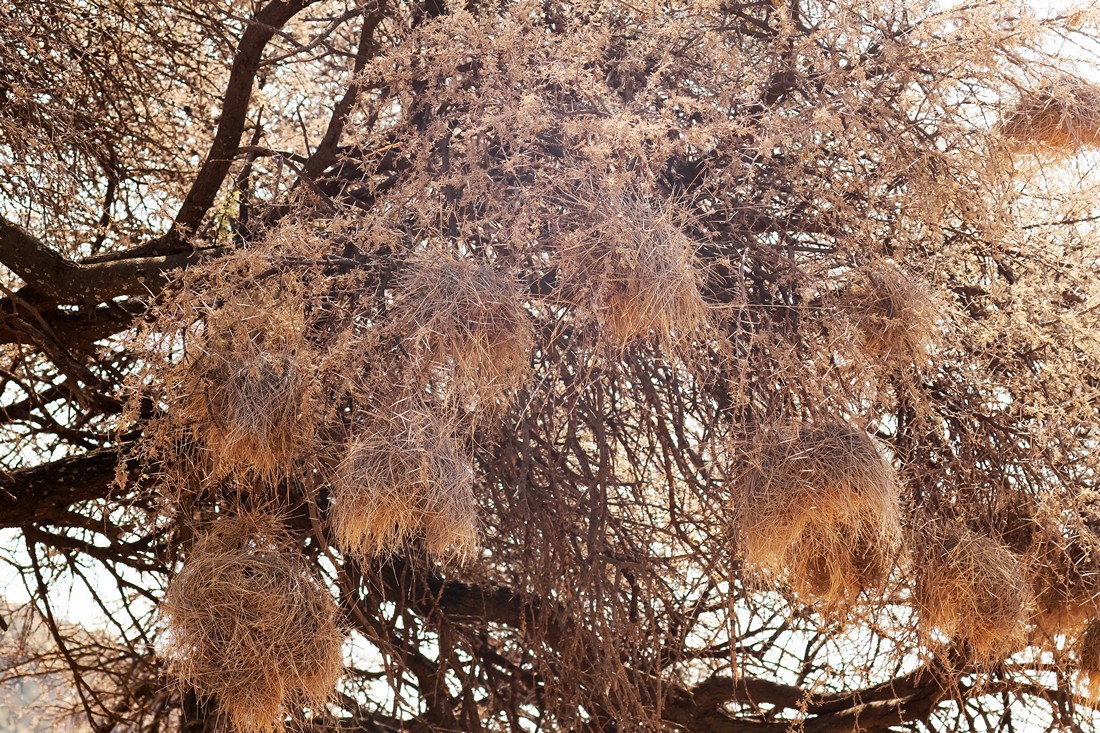
Weaver birds build nesting colonies in the thorn trees
Mokala's beautiful landscape is a mixture of hills, (koppieveld) and open savannah and woodland with lots of acacias. In the rainy season drainage flows into the Riet river along the park's northern border.
There some very common trees in the park. Camelthorn, umbrella thorn, buffalo thorn and blackthorn are seen almost all over. Camelthorn thrives in dry woodland and arid stony areas, and is one of the major tree species in the desert regions all over southern Africa. It occurs as anything from a 2m spiny shrub to tress of 15m or so high with a large crown. Sociable weavers like to nest in camelthorns. The roasted seeds have been used as a coffee substitute.
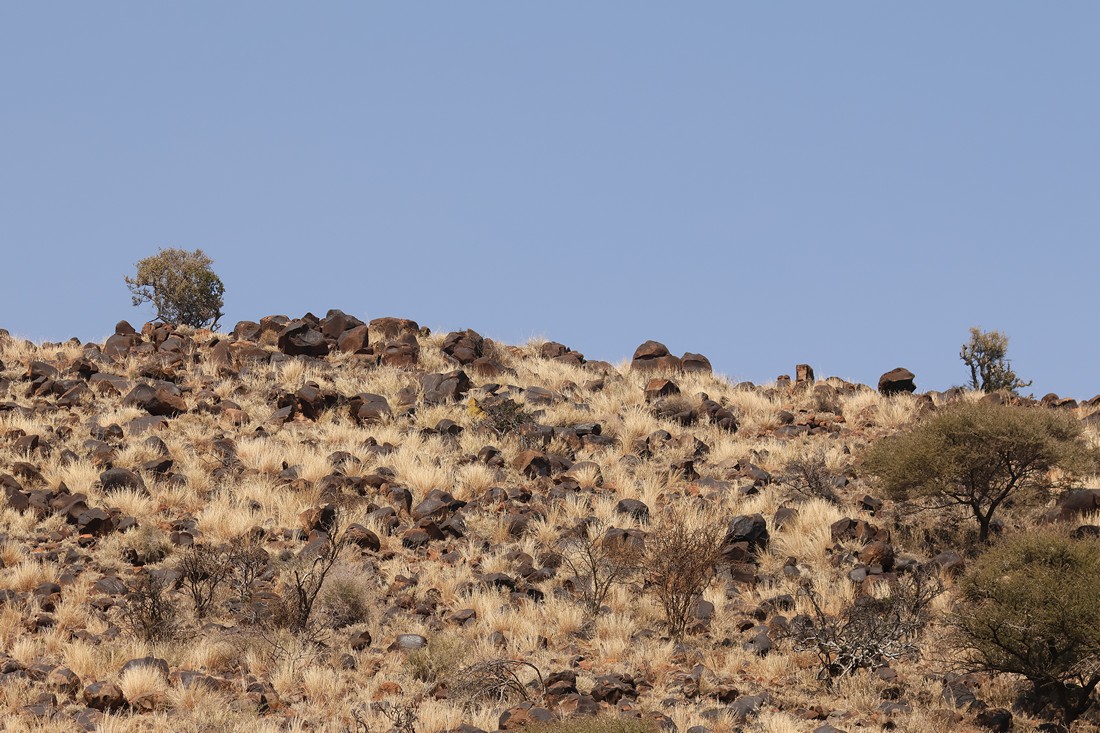
Ancient volcanic rocks 2700 Ma form these
low rocky hills. They are a favoured haunt of
the grey rhebok
Indigenous grasses in the savannah areas include Lehmann love grass, couchgrass and Kalahari sand grass
Geologically there are outcrops of the Volcanic/sedimentary Ventersdorp Supergroup which form low hills and ridges of andesitic lava formations. These are very old proterozoic rocks aged about 2700 Million years.
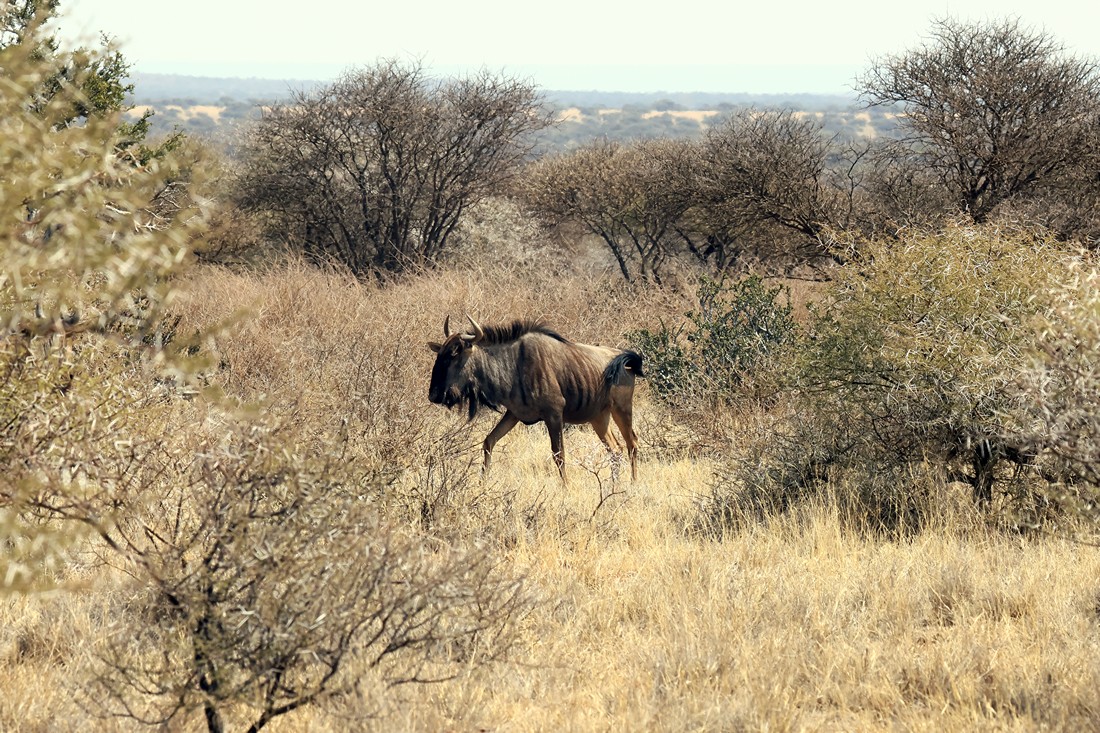
Blue wildebeeste are widespread in the park.
The black wildebeeste have been moved to
another reserve to prevent cross breeding
There is also Karoo Supergroup: Dating back roughly 300 million years, the sedimentary strata includes Dwyka Group tillite outcrops and shales. Most of the park is overlain by wind blown sands and calcrete (cemented by calcium) with colours ranging from deep red to more yellow.
The southern region of the park, closest to the entrance gate, is more plains-like, with isolated camel thorns and tall grasses. The central regions of the park consist of the Karoo-like habitats, with long rows of rocky outcrops interspersed with flat areas of grass and scrub. The base and lower slopes of the outcrops receive extra run-off and are better vegetated.
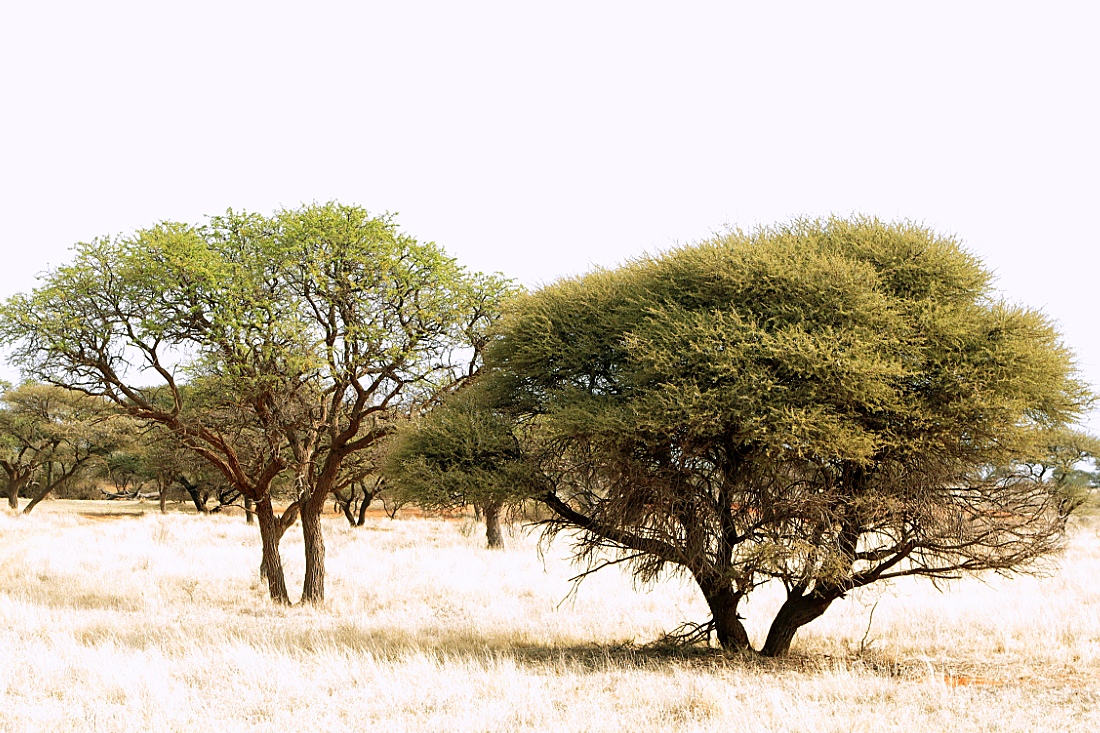
Umbrella thorns and camel thorns are very
common in Mokala. The Umbrella thorn on
the left has a flatter top than the more rounded
dense camel thorn on the right
One of conservation objectives of the park is to conserve the interface of two biomes, (Savanna Biome in the south and the Nama-Karoo Biome in the north)
The park has both types of rhinos in it, but no elephants. It has a wide range of ungulates, including tsessebe, oryx, eland, red hartebeeste, roan and sable antelope. Generally they are easily approachable. The park is used as a sort of nursery to breed more stock to transfer to other parks..
Black wildebeeeste are no longer found here as there were concerns about interbreeding with blue wildebeeste. The black wildebeeste were moved to another private reserve. We were lucky enough to get access and see them.
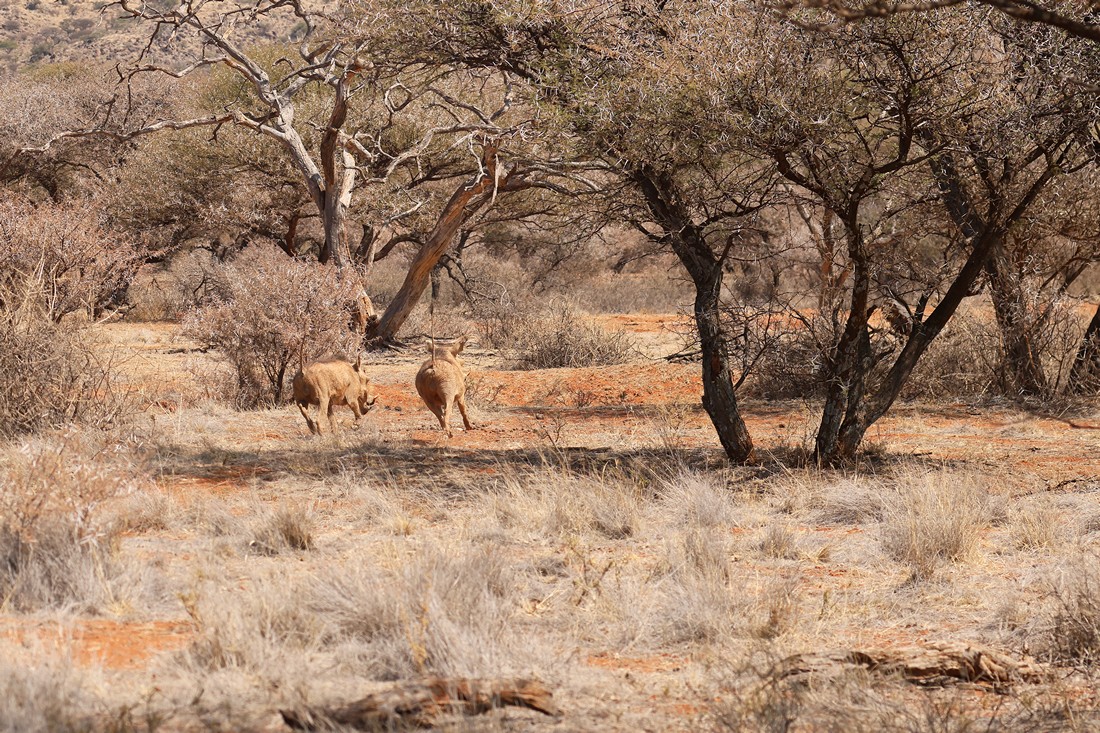
Warthogs are doing very well here. Hardly
surprisng as there are no big predators to
take them
There are no large carnivores here. No lions, leopards or hyaenas. I heard that hyaenas were introduced at one point but there was a lot of opposition from local farmers, and somehow they broke out of the reserve and were promptly shot.
There is also an excellent waterhole surrounded by bush which attracts a large variety of mammals and smaller birds to drink. There is a hide at the waterhole which makes photgraphy very easy. It was definitely worth stopping for a while and enjoying the peace and quiet of the bush.
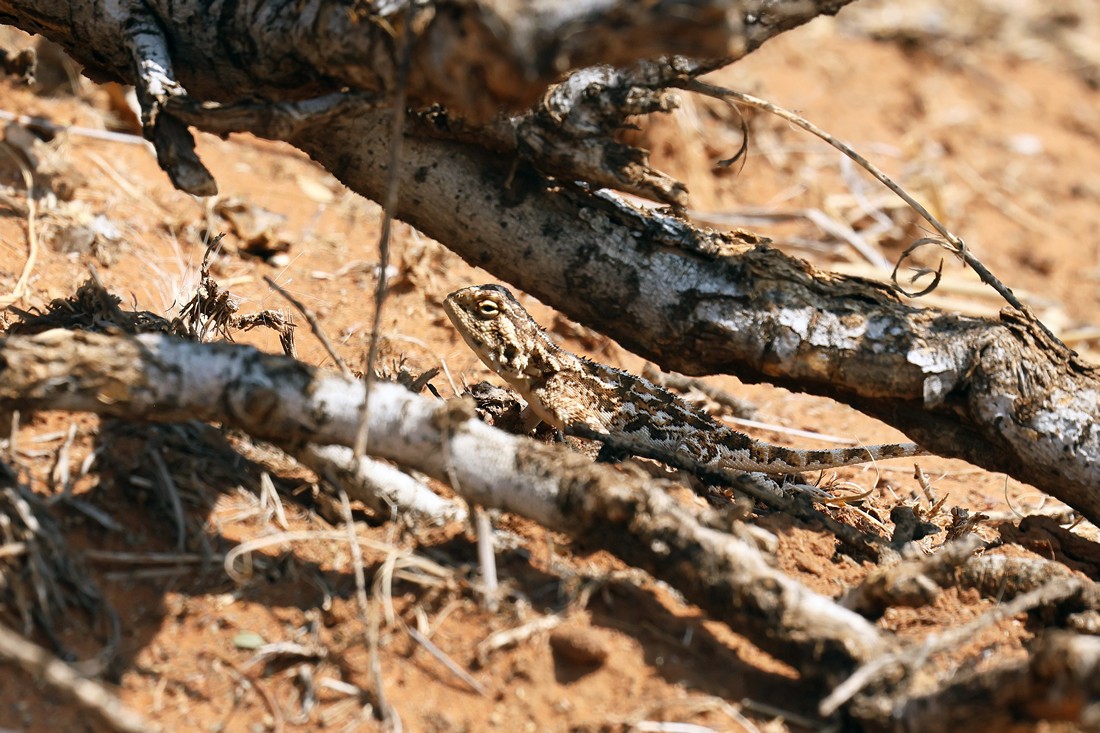
We did see this one small lizard unmoving
under some dead branches. I have no idea
of the species
In a whole day we only saw one other car which contributed to the feeling of being alone with nature. I found the scenery to be very varied and photogenic as well. Well worth visiting for day or two. As the park is only about one hour's drive from Kimberley on paved roads we found it best to stay in a hotel there while we visited the area. SAN Parks do offer accomodation in the park however.
The staff were all very courteous and friendly.